Quantum Genesis as a blueprint: what changes when provenance is physics-backed
When we started Quantum Genesis, we weren't trying to invent a new asset class. We were trying to answer a narrower question: can you build a generative project whose origin story is actually verifiable, starting from physics up? This post is that answer — a blueprint, honestly labeled. It covers how supply is enforced, how provenance can be checked, and where the approach starts to bend.
Most "scarcity" in digital art is an agreement. A contract says there are 100 of these, a marketplace agrees to keep it that way, and everyone trusts the combination. That arrangement works — until someone forks, migrates, or simply changes the narrative. Quantum Genesis takes a different route on exactly one attribute: the seed behind each piece is a quantum measurement, and a measurement outcome is a one-time physical event that cannot be reproduced, in principle.
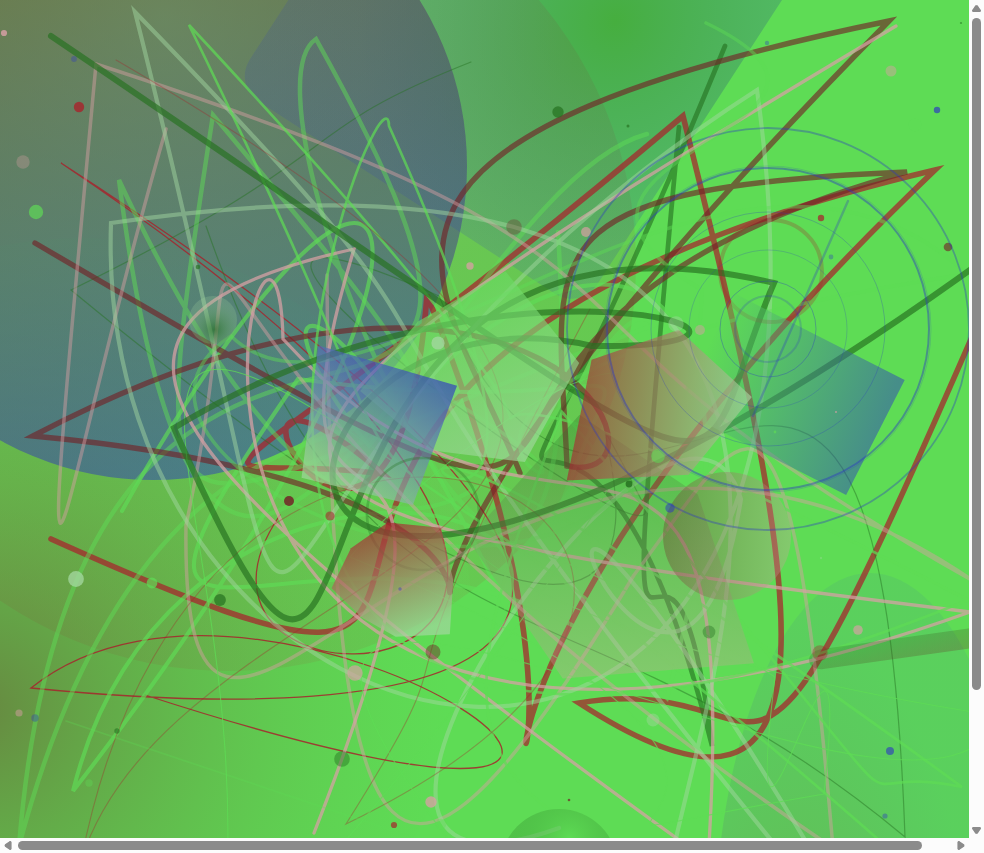
Three ways things end up scarce
| Scarcity Source | Examples | Vulnerability |
|---|---|---|
| Physical uniqueness | Mona Lisa, rare earth elements, Patek Philippe | Forgery, degradation, physical seizure |
| Social consensus | Bitcoin (21M), limited sneakers, Art Blocks | Forks, platform risk, narrative shift |
| Physical law | Quantum Genesis | None (physics is immutable) |
When you measure a qubit in superposition, the outcome isn't determined by any algorithm, hidden variable, or social agreement. It's a fundamental quantum event. The Born rule — one of the most experimentally verified principles in physics — makes that measurement unpredictable and irreproducible. That is not "blockchain scarcity." That is physics.
The contract properties, checked one by one
These six properties are the concrete design decisions behind the deployed contract and metadata. Each one is checkable:
- A hard cap of 100, permanently. The smart contract enforces a cap of 100. No minting function exists beyond the initial deployment.
totalSupply()is immutable. Verifiable on PolygonScan in one click. - Provenance you can run, not just read. Every piece carries a quantum seed verifiable by anyone running the open-source code. No expert opinion needed, no certificate of authenticity to forge — the physics is the certificate.
- First of its kind. Quantum Genesis is the first NFT collection where every piece originates from a quantum measurement on real hardware — not a simulator, no fallback.
- Hardware epochs embedded. NFTs #1–18 come from Origin Quantum's WK_C180 (8,000 shots each); NFTs #19–100 from IBM Quantum's ibm_fez and ibm_torino (4,096 shots each). The exact hardware configurations that produced these seeds no longer exist in the same state — the collection captures a moment in quantum computing history that can't be replicated.
- Royalties without marketplace goodwill. EIP-2981 at 5% is honored by OpenSea, Blur, LooksRare, and any other compliant marketplace. The creator revenue isn't dependent on a platform choosing to pay it.
- No admin keys. Metadata is frozen on-chain. IPFS is pinned redundantly. The contract can't be upgraded, paused, or censored, and there are no upgrade keys to compromise.
Provenance sources compared
| Origin of uniqueness | Verifiable how | Reproducible? | |
|---|---|---|---|
| Traditional painting | Physical uniqueness | Human expertise | Replicable (forgery risk) |
| Blockchain tokens (e.g. Bitcoin) | Social consensus on supply | On-chain record | Protocol could fork |
| Classical generative NFT | Limited edition + on-chain record | Chain + code | Pseudorandom seed, reproducible |
| Quantum Genesis | Quantum measurement | Chain + open-source re-run | Not in principle |
What this enables next
The pipeline is a reproducible pattern for physics-guaranteed digital work, not just this one collection:
- Quantum-backed randomness as a service. The same generation step can produce seeds for cryptographic key ceremonies, fair lottery and raffle systems, DAO governance randomness, or game loot drops with provable fairness.
- Quantum provenance for physical assets. Pair a physical artwork with a quantum-generated digital twin. The seed becomes a certificate of authenticity that can't be separated from the piece.
- Time-locked quantum revelations. Use quantum measurement timing as a verifiable timestamp. A seed measured at block N proves the digital asset existed at that exact quantum moment.
- Entangled collections. Multiple pieces seeded from the same circuit run have correlated measurement outcomes — two "entangled" assets that are mathematically linked.
What owning one verifies
If you hold a Quantum Genesis piece, here's what's actually true about it:
- It's 1 of 100 pieces whose seeds came from real hardware measurements.
- Its uniqueness is provable — not "trust me," but "run the code."
- Its provenance is anchored on Polygon, on IPFS, and in the measurement itself.
- Secondary sales pay a 5% creator royalty at the protocol level via EIP-2981.
- It records specific processors, specific measurements, specific microseconds — a slice of quantum hardware history.
One honest caveat: the "physics" layer only binds if the seed was genuinely measured, and that claim rests on the provenance records we published alongside the pipeline — which is exactly why the whole thing is open source. You can inspect the collection directly on OpenSea if you want to check the traits yourself.


Comments
Post a Comment