Quantum Genesis, Verified: What Each Token Contains and How to Check It
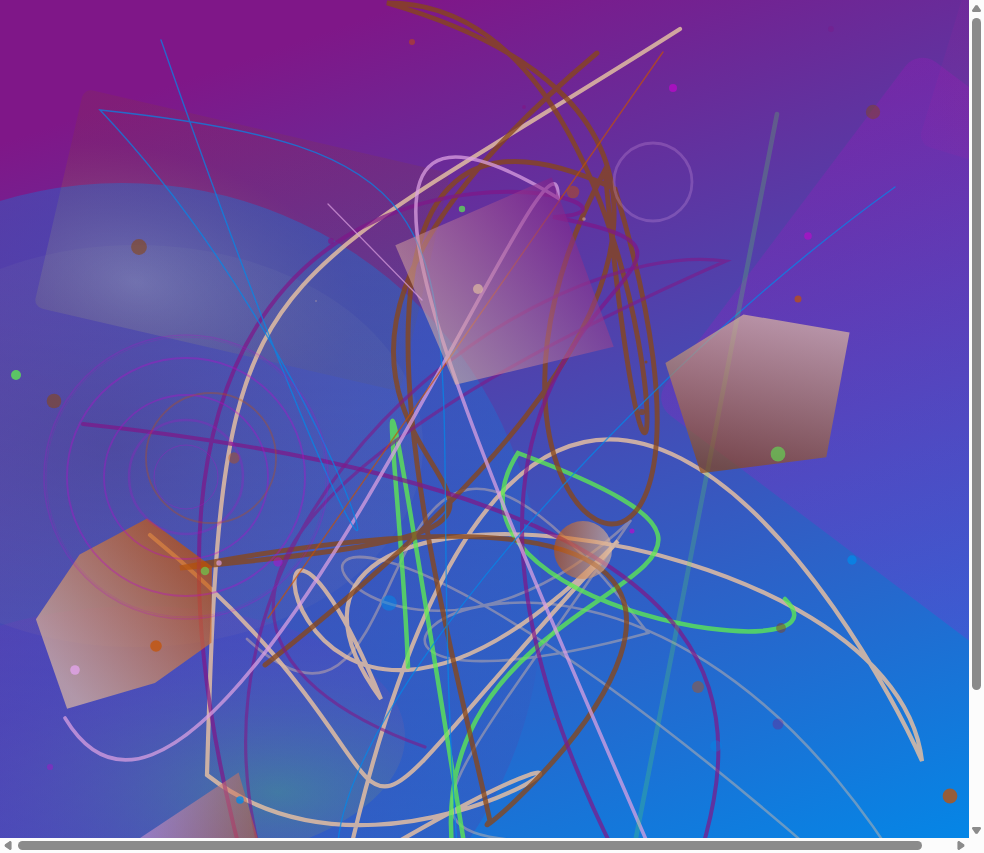
I've been burned by impostor collections before — by that I don't mean losing money, I mean the specific incompetence of almost minting a token from a copycat contract because the marketplace page looked right. So when we shipped Quantum Genesis, I wrote the verification checklist I wished I'd had. This post is that checklist, and it doubles as an explanation of what a Quantum Genesis token actually is.
I'm going to skip the "how to buy" part on purpose. If a piece of this collection matters to you, the thing worth learning is how to verify it — the seed, the certificate, the rarity tiers — and that's transferable to any on-chain art you look at. If you're new to the general mechanics of listing and trading, my OpenSea walkthrough covers that ground separately.
What a token actually is
When a Quantum Genesis piece changes hands, what transfers is a bundle that's unusual compared to typical "digital art":
- A unique quantum measurement record — a physical event on real quantum hardware (IBM Quantum or Origin Quantum) at a specific microsecond
- The cryptographic seed derived from that measurement — a 256-bit hex string that can't be reproduced
- The generative artwork — computed deterministically from that seed
- On-chain provenance — an immutable record on Polygon with assets on IPFS, verifiable by anyone
- EIP-2981 royalty mechanics — 5% of any secondary sale routed by the contract
There are exactly 100 pieces. No more can ever be minted; the contract is frozen at a fixed supply.
Where it lives
The collection is indexed on OpenSea as a verified collection, and two things anchor every token:
- Contract address:
0x488fCfaEA5fDf1cF6BAED5e8A34D7858033E1a27on Polygon — verified on PolygonScan - Collection: opensea.io/collection/quantum-genesis
Signals that indicate you're on the real collection: the blue verification checkmark, 100 items, the contract address above, and a 5% royalty (EIP-2981) displayed on the page.
The checks I run
Before touching any piece, work through this list. It takes two minutes:
- Check the contract address on the item page. It must be
0x488fCfaEA5fDf1cF6BAED5e8A34D7858033E1a27. - Check the token ID is within 1–100. No other IDs exist.
- Open the metadata — Details tab → Metadata — and confirm the fields:
Quantum Seedpresent (64-char hex)Processorsays "IBM ibm_fez", "IBM ibm_torino", or "Origin WK_C180"Entropy Scorein 0–100Timestampin ISO 8601 format- Verify the image CID — the image URL should resolve through
ipfs.io/ipfs/...ormaroon-bright-perch-405.mypinata.cloud. - Regenerate (optional, but it's the strongest check): take the seed from metadata and run the open-source generator locally. You should get the exact same art.
Step 5 is the one that separates this from "trust me" provenance — the generator is public, so verification is a local computation rather than an act of faith. The full end-to-end chain is documented in the provenance deep dive.
How rarity is defined here
No "gold skin" tiers. Rarity comes out of the physics of each measurement:
| Rarity factor | What it means | Rarest tier |
|---|---|---|
| Entropy score (0–100) | Closeness to a perfect superposition | Maximum (95+) — only 3 NFTs |
| Quantum phase | Coherence state during the measurement | Mixed — only 7 NFTs |
| Color harmony | Algorithmic color relationship | Analogous — only 10 NFTs |
| Processor origin | Which quantum computer ran the circuit | Origin WK_C180 — 18 NFTs |
By those criteria, the statistical standout is NFT #47 — max entropy + analogous harmony + mixed phase + ibm_fez. A compound of four independent rare conditions, which is as close to a unicorn as a hundred-piece set can produce. If you're curious how these tiers map across the whole set, the rarity ranking post breaks down the distribution piece by piece.
Storage: the boring parts that matter
None of the verification above helps if the wallet holding the piece is a liability:
- Use a hardware wallet — not an exchange, not a hot wallet you use daily
- Verify the contract address before signing any transaction
- Keep high-value NFTs on a dedicated address, separate from daily trading
- Back up your seed phrase offline; a metal plate is genuinely the best option
- The token lives on Polygon mainnet — make sure your wallet is on Polygon, not Ethereum
That last one trips people up constantly. If you claim a Polygon NFT onto an Ethereum-configured wallet UI, the token simply doesn't render.
One note on royalties
Every time a Quantum Genesis piece is resold on any EIP-2981-compliant marketplace (OpenSea, Blur, LooksRare, Magic Eden, and so on), the contract routes 5% of the sale price to the royalty receiver. No configuration needed, no marketplace opt-in. I want to be explicit that I'm describing contract behavior, not promising returns — royalties only happen when a sale happens. The mechanics are set in the contract itself; if you want the Solidity, the contract walkthrough has it in full.
Links and tools
- OpenSea: opensea.io/collection/quantum-genesis
- Contract on PolygonScan: polygonscan.com/address/0x488fCfaEA5fDf1cF6BAED5e8A34D7858033E1a27
- Code and verification tooling: github.com/marceloclaudecode01/quantum-art-lab
- Regenerate any piece locally:
python generate.py --seed
If you run the checklist on a piece and something doesn't line up — a trait missing, a seed that renders differently — tell me. That's exactly the kind of bug I'd rather fix in the open than find out about later.


Comments
Post a Comment